
Event Execution
Event Execution
After the floor captain has administered setup, they are responsible for directing and executing operations throughout the event. This includes managing 9 primary components: prepare for guests, offer wine service, take orders from guests, communicate orders to the expeditor, captain, or kitchen, maintain tables while awaiting course serve-out, serve out courses, clear courses, manage transitions seamlessly, and monitor staff performance
1.Prepare for Guests
At least 30 minutes prior to guest arrival, the floor captain should ensure that setup is complete.
Captains and wait staff should be positioned at proper points, in proper uniform, and ready to welcome guests.
2.Offer Wine Services to Guests
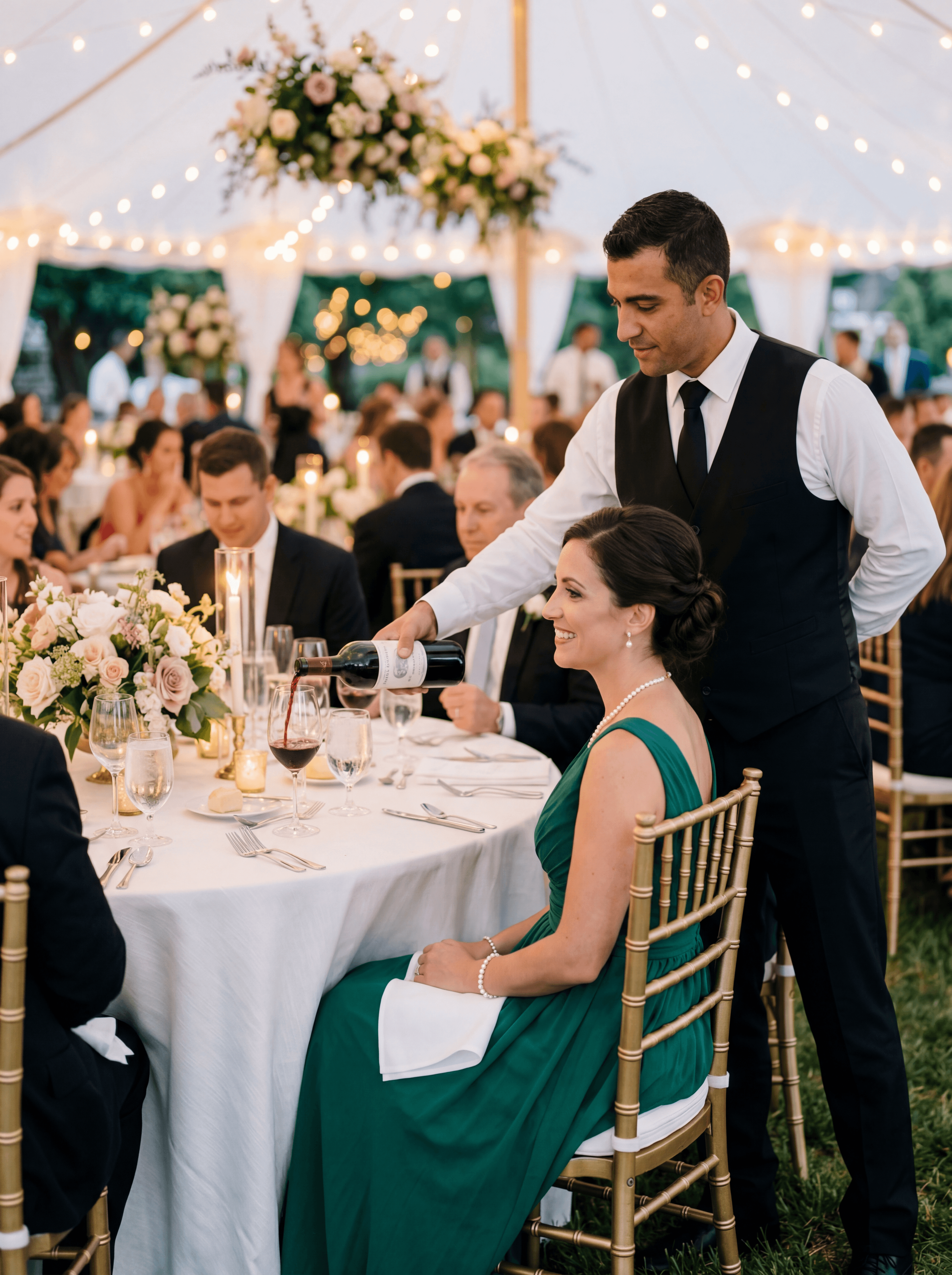
Instruct wait staff and/or wine stewards to offer wine service to guests, reminding them of the proper protocols for offering bottles, handling bottles, switching bottles, and pouring bottles.
Model guest engagement in prioritizing prompt, efficient, and friendly service. Acknowledge guests, inform them of offerings, and provide service.
Accommodate requests whenever possible, remaining flexible in service and committed to guest satisfaction.
3.Take Orders from Guests.
Direct wait staff to take orders from guests once wine service has been offered. In this, the service professional team should:
Approach guests from their left while maintaining respectful eye contact
Write orders clearly on order forms, indicating special requests in the appropriate section
Move forward around the table, taking all orders before stepping away from the table
4.Communicate Orders to the Expeditor, Captain, or Kitchen
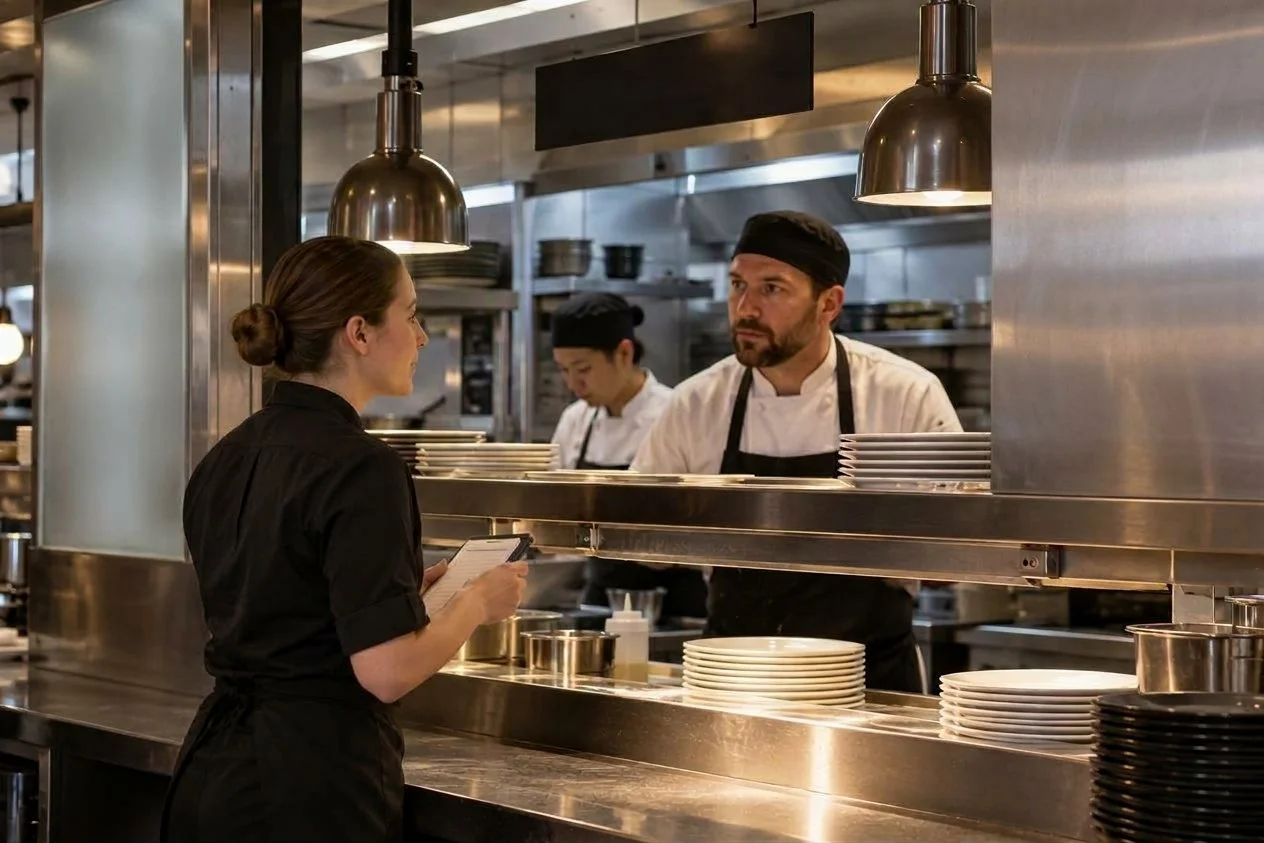
Direct wait staff to communicate (”call”) orders to the kitchen. In this, adhere to the following procedures:
Collect all orders from the team and total them
Say “Order in” or “Chef, order in” to inform the expeditor and culinary team you are ready to provide dining room totals
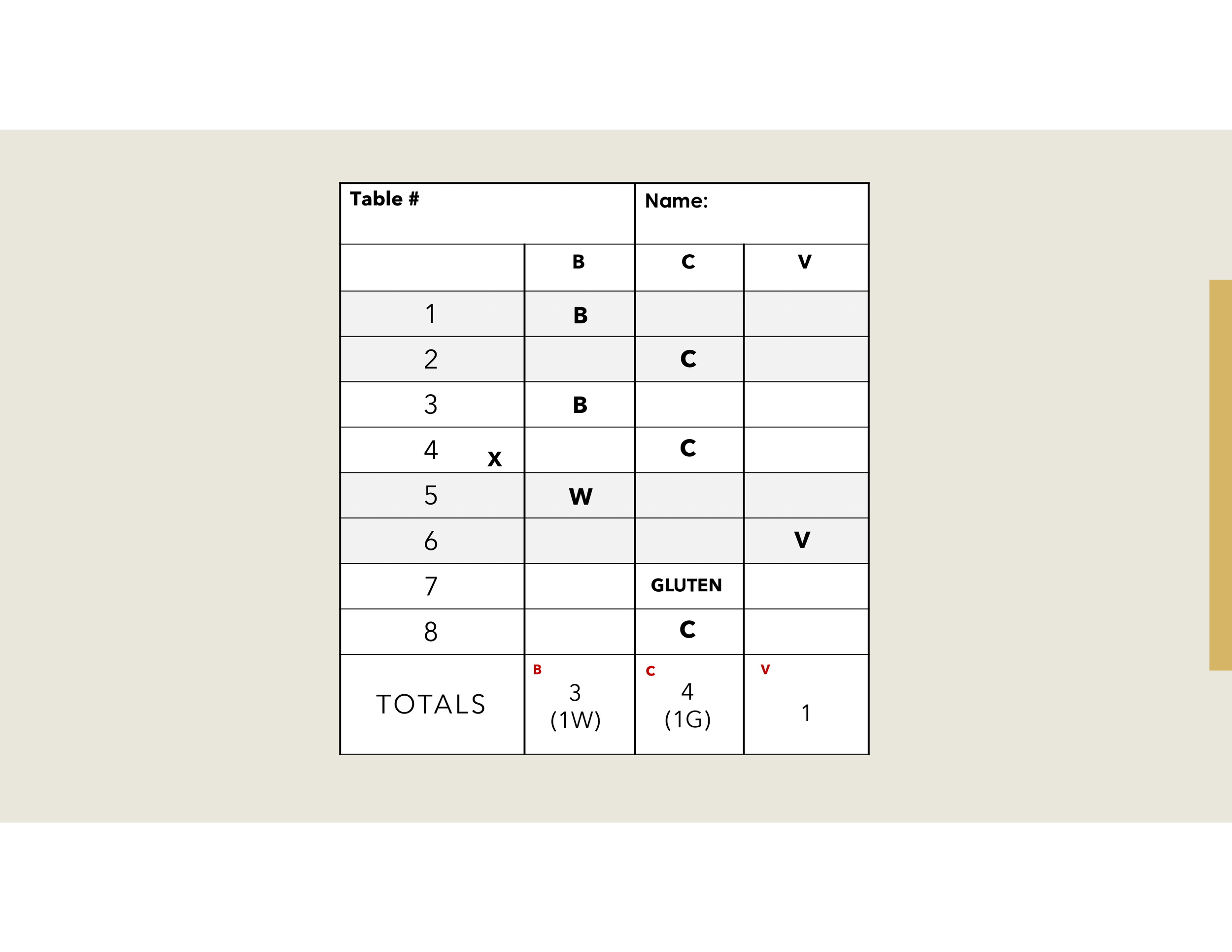
Communicate the totals including allergens and special requests
a. Call the menu item totals using this formula: [Protein] [Protein total], [number of which have specific requests] [special requests]. Examples:
i. Chicken 50, 2 of which are gluten free
ii. Vegetarian 10
iii. Beef 100, 5 of which are well done
Clarify time to fire
Maintain Tables While Awaiting Course Serve-Out
Ensure wait staff and wine stewards are maintaining table service while awaiting course serve-out. This includes refilling beverages, bussing tables, and checking in to ensure guest satisfaction.
Maintain visibility on the floor to assist the wait staff and monitor overall team performance.
6. Serve Out Courses
Recall the style of service (sweep, synchronized, or serve and clear) the event requires. Follow these steps:
Use internal hand signals to inform the team they should prepare for serve out
Ensure teams are lined up in the kitchen (while wine stewards remain at assigned tables to provide service)
Work with the expeditor to ensure dishes are properly plated, presented, and made to specification
Direct teams to gather their plates
After teams have plates in hand, return to the dining room floor to direct serve-out
Stand at the first table served in the sequence to the right of position 1, directing the movement of the team around the table
Once one table is complete, move to the next table in the sequence to the right of position 1
In this, the floor captain should be constantly communicating with the expeditor to ensure proper pacing and overall service.
7.Clear Courses
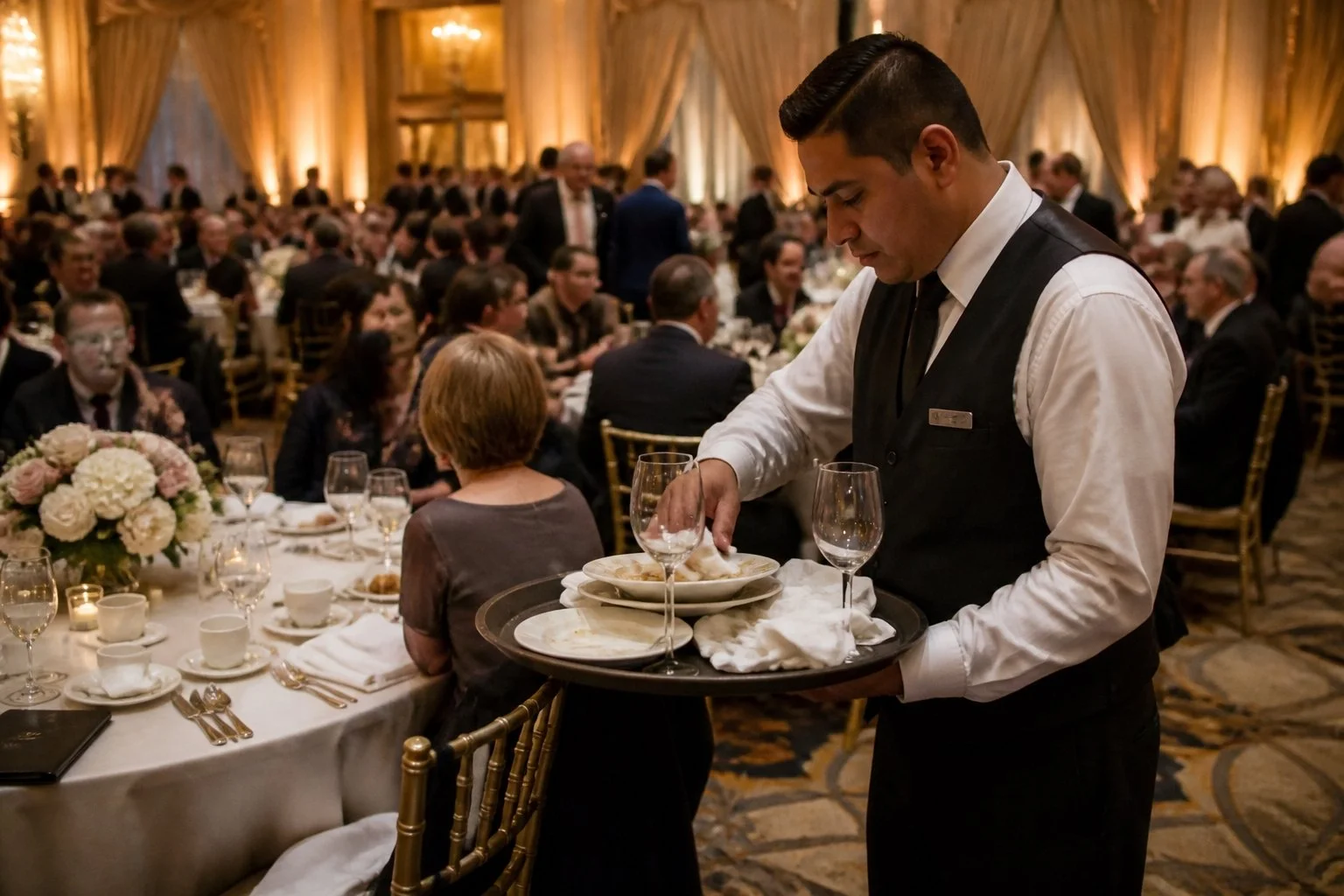
To clear a course and prepare for the subsequent one, follow these steps:
Assess the estimated time it will take to complete the course clearing and determine the appropriate moment to fire the next course
Communicate clearing will begin with the sanitation and relevant BOH staff
Communicate clearing will begin with the kitchen, expeditor, and relevant culinary staff. Provide them with an approximate lead time for the next course pickup (in the event there is a subsequent course)
Use internal hand signals to inform the team they should prepare to clear. Note it should take roughly 15 minutes to clear a room if the event is properly staffed
Communicate across the BOH and FOH regarding the timing of the next course
Follow the protocols for serving out courses when the timing is appropriate
8.Manage Transitions Seamlessly
Address transitions between dinner and coffee or dessert service as necessary. Coffee and dessert services require their own set of steps depending on if there is a specific style of dessert and coffee service, individual dessert and coffee service, or dessert service cleared and followed by coffee service.
Sweep Style Dessert and Coffee Service
Mark the tables with coffee cups, teaspoons, and cream and sugar caddies
Direct wait staff to line up in the kitchen, retrieve dessert, and serve the room
Divide staff into pairs, such that one team member serves regular coffee and the other follows to serve decaf or team to guests who request it
Individual Dessert Service
Mark the tables with coffee cups, teaspoons, and cream and sugar caddies
Direct wait staff to line up in the kitchen, retrieve dessert, and serve their own assigned tables
Divide staff into pairs, such that one team member serves regular coffee and the other follows to serve decaf or team to guests who request it
Dessert Service Followed By Coffee Service
Serve dessert using the protocols for sweep service or individual dessert service (in which teams sweep the entire floor or manage their own assigned tables)
Clear the dessert course following appropriate protocols
Serve coffee using the protocols for sweep service or individual dessert service
9. Monitor Staff Performance
If applicable, the floor captain must monitor the performance of any staff. To do this, he, she, or they should maintain a visible presence and actively supervise the staff, offering support, guidance, and direction.