
Pre-Event Preparation and Setup
Administer Setup
After reviewing, organizing, and verifying equipment and conducting a staff meeting, the buffet captain must administer setup of the area.
Generally, in every setup of the buffet, the buffet captain should:
Box buffet and/or station tables with linens.
Position guest plates at the beginning of the buffet in organized stacks (10-20) (which allows for an easy count of the number of covers served).
Conduct a dry setup. Organize equipment and signage on the table as they will appear during service. Use post-it notes and/or cards. This ensures there is a logical layout planned before food is added.
Order the dishes properly, following the standard protocol of arranging food from the least expensive (e.g., salads, roasted vegetables) to the most expensive (e.g., proteins such as chicken or steak). Evenly distribute high-cost items, preventing waste and maintaining balance for all guests.
Order the dishes such that dietary restrictions and/or preferences are accommodated (e.g., such that vegetarian options are grouped together, gluten-free options are grouped together).
Ensure all items are at least 6 inches from the ground to prevent contamination.
Approve the dry setup for accuracy and functionality (checking this against event documentation).
Position utensils (flatware, rollups) at the end of the buffet in an organized manner. This keeps guests’ hands free as they navigate the buffet line.
Ensure all items meet safety requirements (e.g., all dishes are 6 inches from the ground).
In addition to following the general setup of buffets and stations, the buffet captain should be attentive to the requirements of navigating and aligning the processes of both BOH and FOH.
BOH
Communicate with the culinary team to confirm inventory levels, timelines, and any necessary processes
Establish clear communication channels between the BOH culinary team and the FOH buffet team to
Confirm the expected preparation timeline
Confirm and regularly update food inventory levels and navigate replenishment
Discuss any specific client or chef requests
FOH
Communicate with the buffet staff to align the timing of the culinary team and the buffet staff to navigate food replenishment
Review the menu with the buffet staff and ensure all members are aware of communication channels between the BOH culinary team and the FOH buffet team in the event of questions about
The preparation and serving timelines
Food presentation
Existing allergens
Possible modifications to accommodate dietary needs and preferences
Confirm the best placement of areas for trays
Assign buffet staff to a particular food offering or menu portion to ensure confidence in serving
Coffee and Dessert Setup
A description of coffee and dessert setup appears in the Sanitation Captain course. However, there are some key considerations that are unique to coffee and dessert services.
Generally, in the setup of coffee, the buffet captain should:
1. Position cups or mugs at the beginning of the station
2. Position coffee machines or urns to the right of the cups or mugs.
a. Next, place the regular coffee and decaffeinated coffee in that order
3. Position the hot water next
a. Next, place regular tea and decaffeinated tea in that order
4. Position sweeteners next
a. Order regular sugar, artificial sweeteners, and others in clear, labeled containers in rows or groups
5. Position milk, cream, and non-dairy alternatives next
a. Order dairy milk, cream, and then non-dairy alternatives in carafes or pitchers, ensuring these are a safe distance from coffee and tea options
6. Position stirrers or spoons next
7. Position napkins, rollups, or napkin folds next, especially if serving coffee with dessert
8. Position additional, optional “extras” next, at the end of the station
a. These include items like flavored syrups, cocoa powder, and
In the event that there is a transition from a dinner buffet to a coffee and dessert service, there are a few items to keep in mind:
Check linens. If the transition from dinner to coffee and dessert involves using the same table (i.e., flipping a table), then ensure the linen is free from stains and/or that an additional overlay or fresh linen is available.
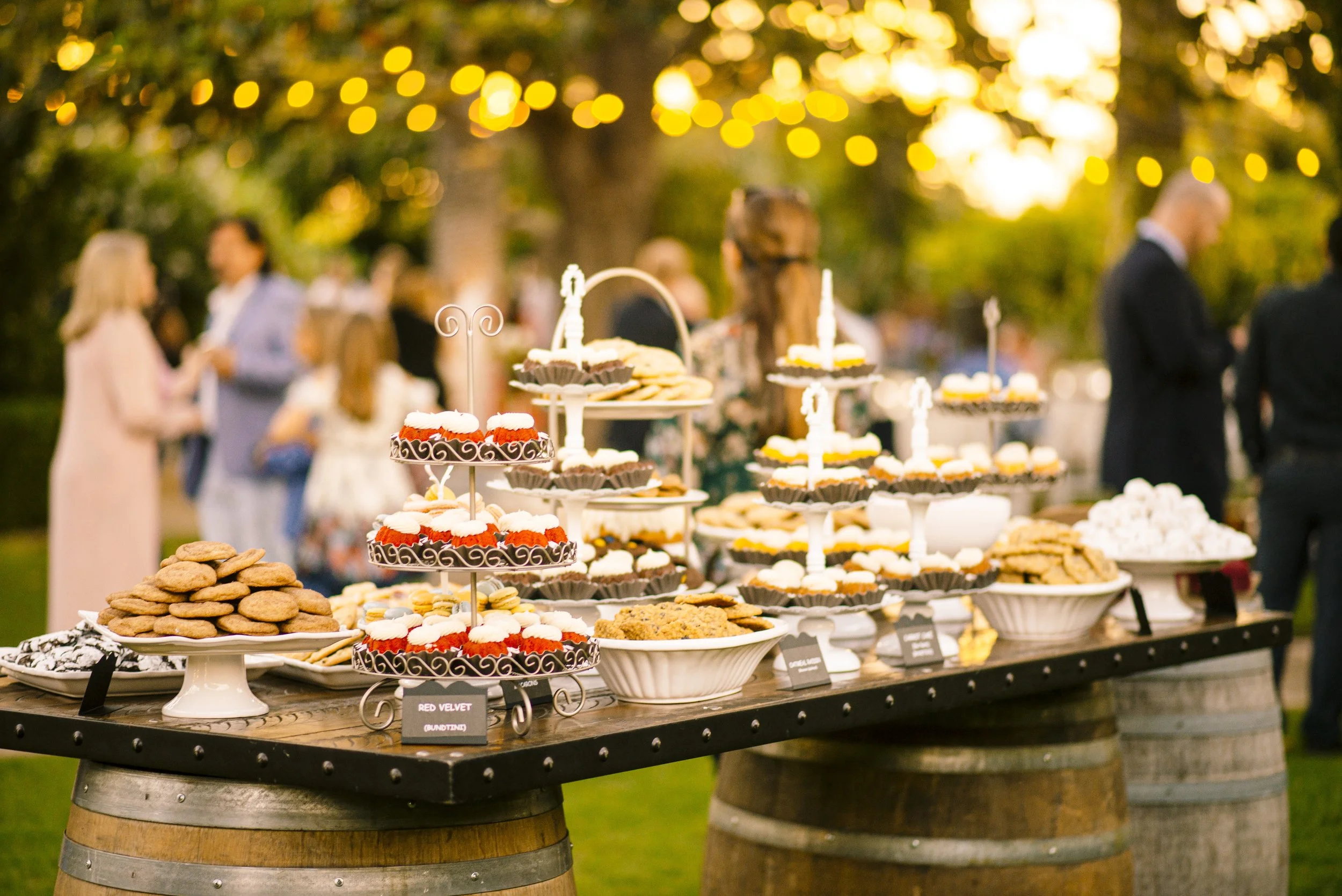
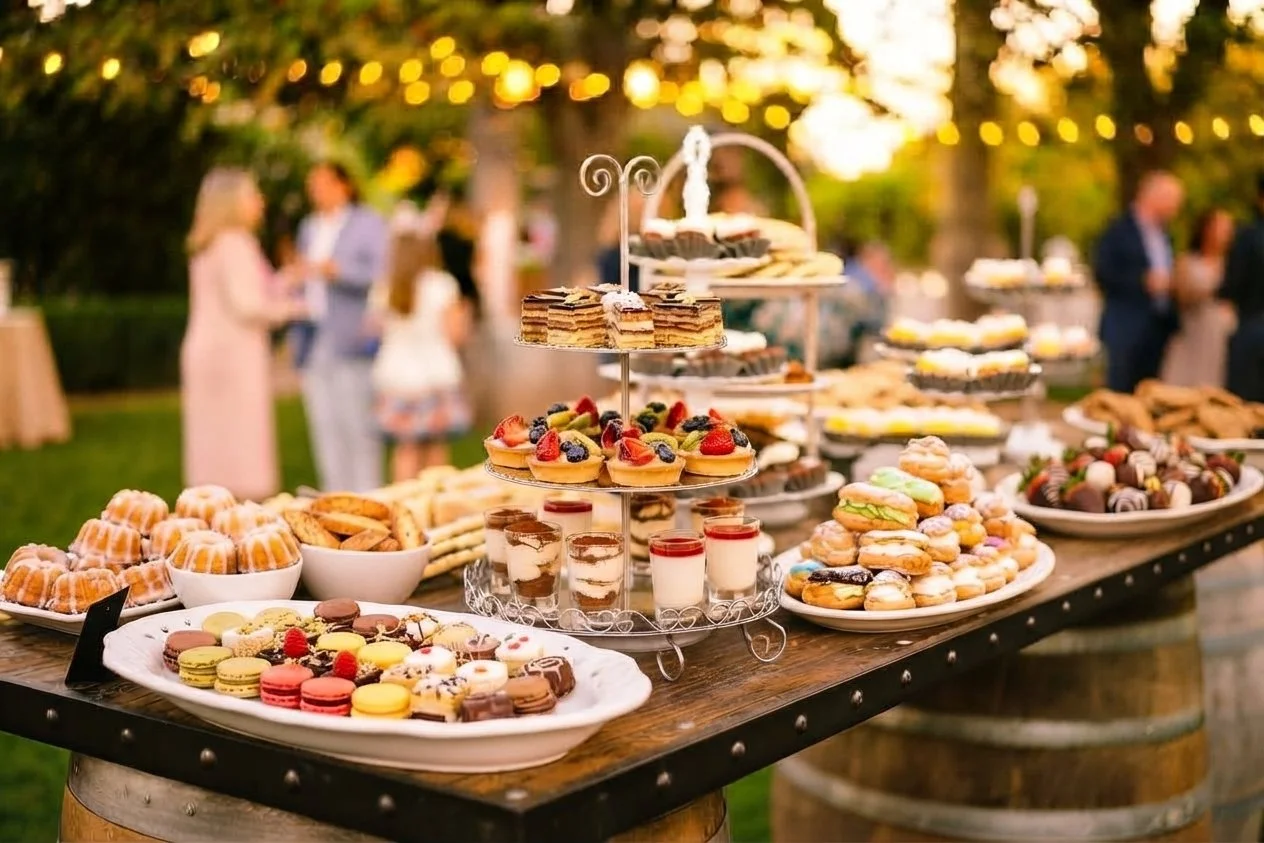
Use tiers. Use tiered or elevated trays to display coffee and/or dessert items. Place elevated items towards the back and non-elevated items towards the front. This creates a visually appealing and accessible display, one that will ultimately be approved (if not determined) by the client and/or culinary team.
Order logically. Place desserts in a logical order (e.g., cakes, pastries, fruit) to make it easier for guests to navigate. Label desserts with clear signage.
Plates: Place plates at the beginning of the food display or spaced out when using smaller tasting plates.
Position utensils. Ensure appropriate utensils (e.g., forks, spoons, service utensils) are available at the buffet, either in rollups or on napkin folds. Guests will often not have utensils at their tables.
Check levels. Ensure coffee and dessert levels are appropriate, directing replenishment as needed.
In the process of setting up and transitioning between kinds of service, be attentive to
Maintaining the integrity and presentation of the tables, including ensuring the stability of the tables, the cleanliness of linens, the positioning of table signage, serving vessels, utensils, and the presentation of food that remains aesthetic and functional
Checking that the hot water level used in the chafing dishes remains around 1 to 1.5” in the base pan
Checking that the temperature of chafing dishes, sternos, and other equipment keep hot foods hot and cold foods cold
Reminding the team about safe food handling and safety measures
Conducting regular check-ins with the team to address question and confirm the flow of service