
Post-Event Analysis
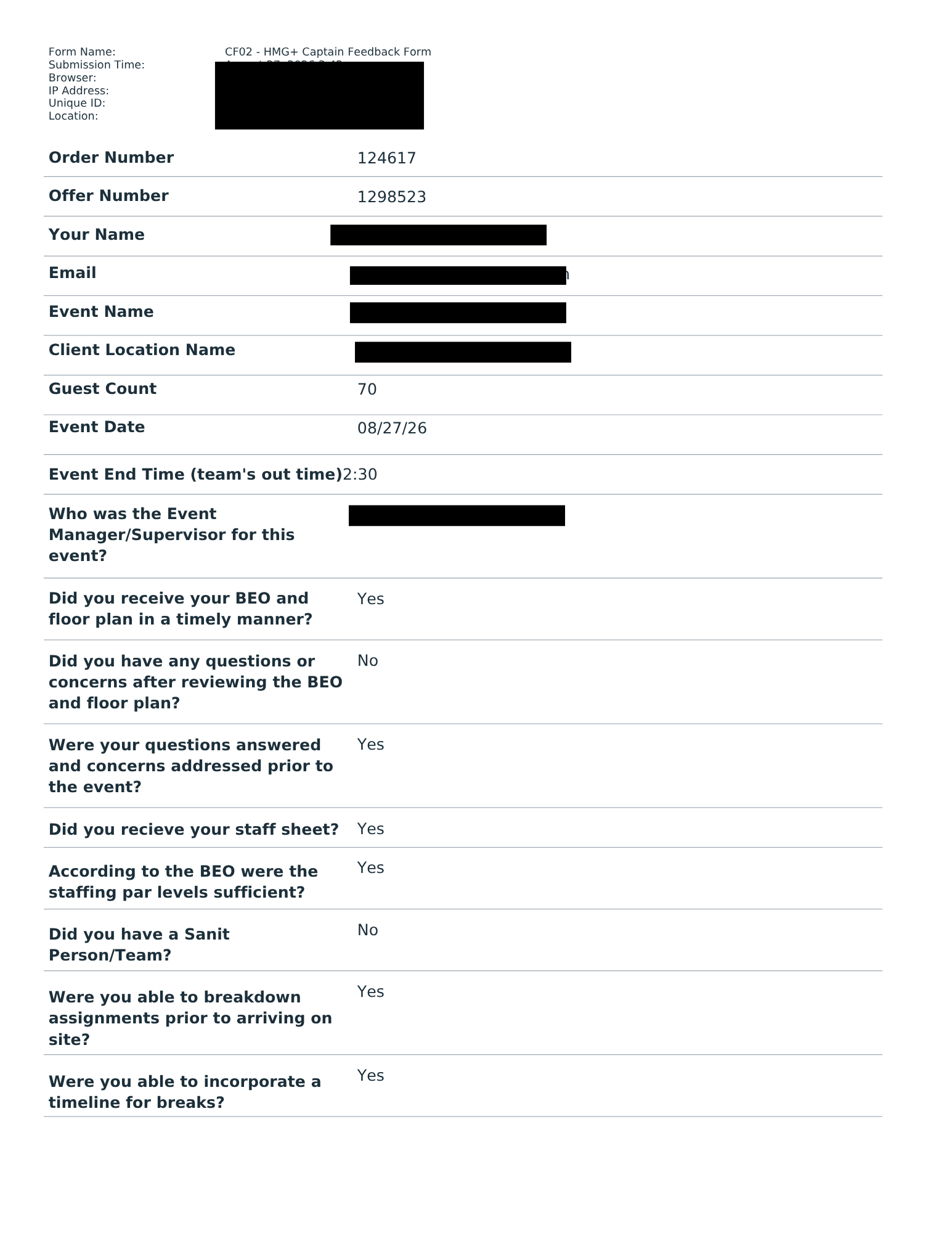
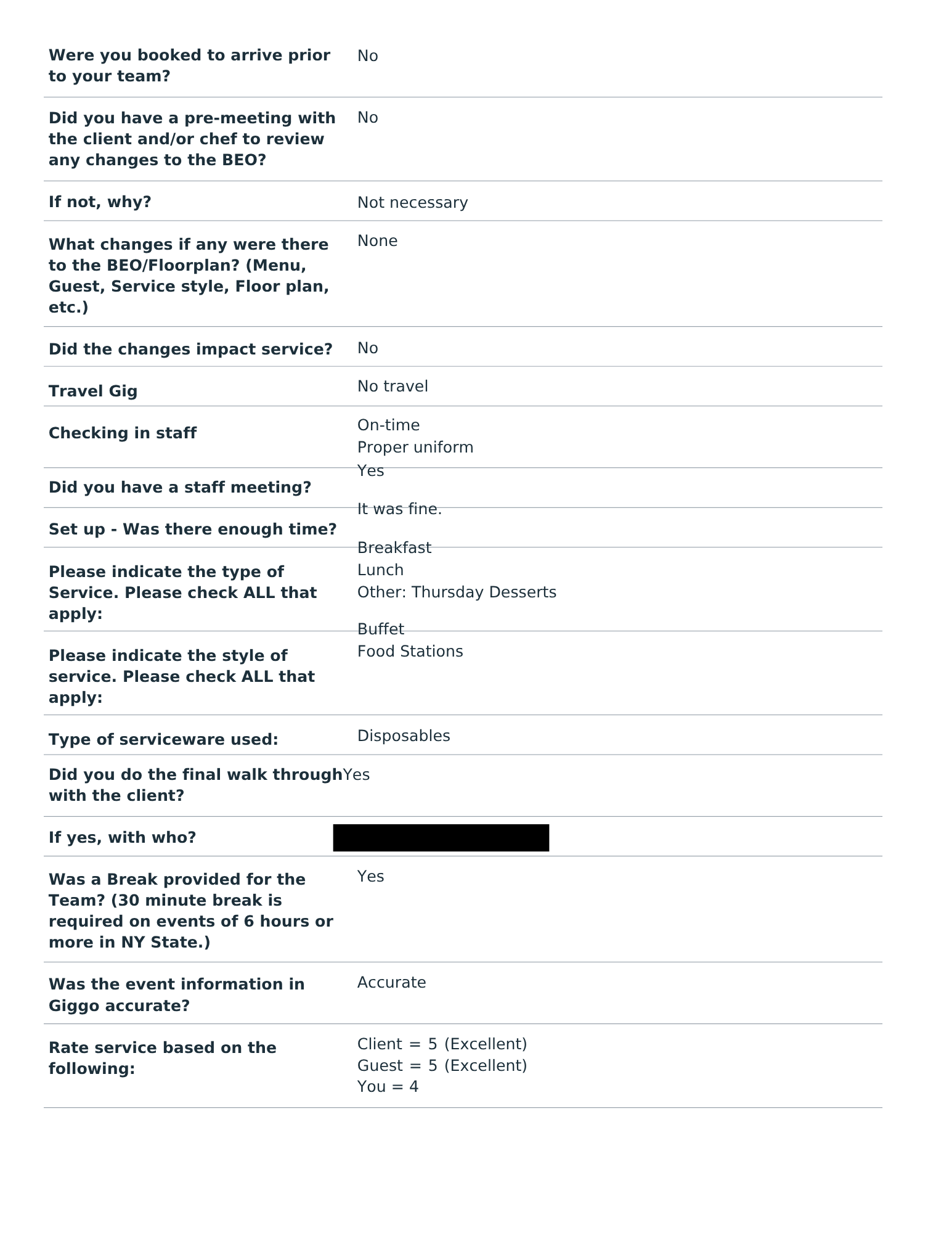
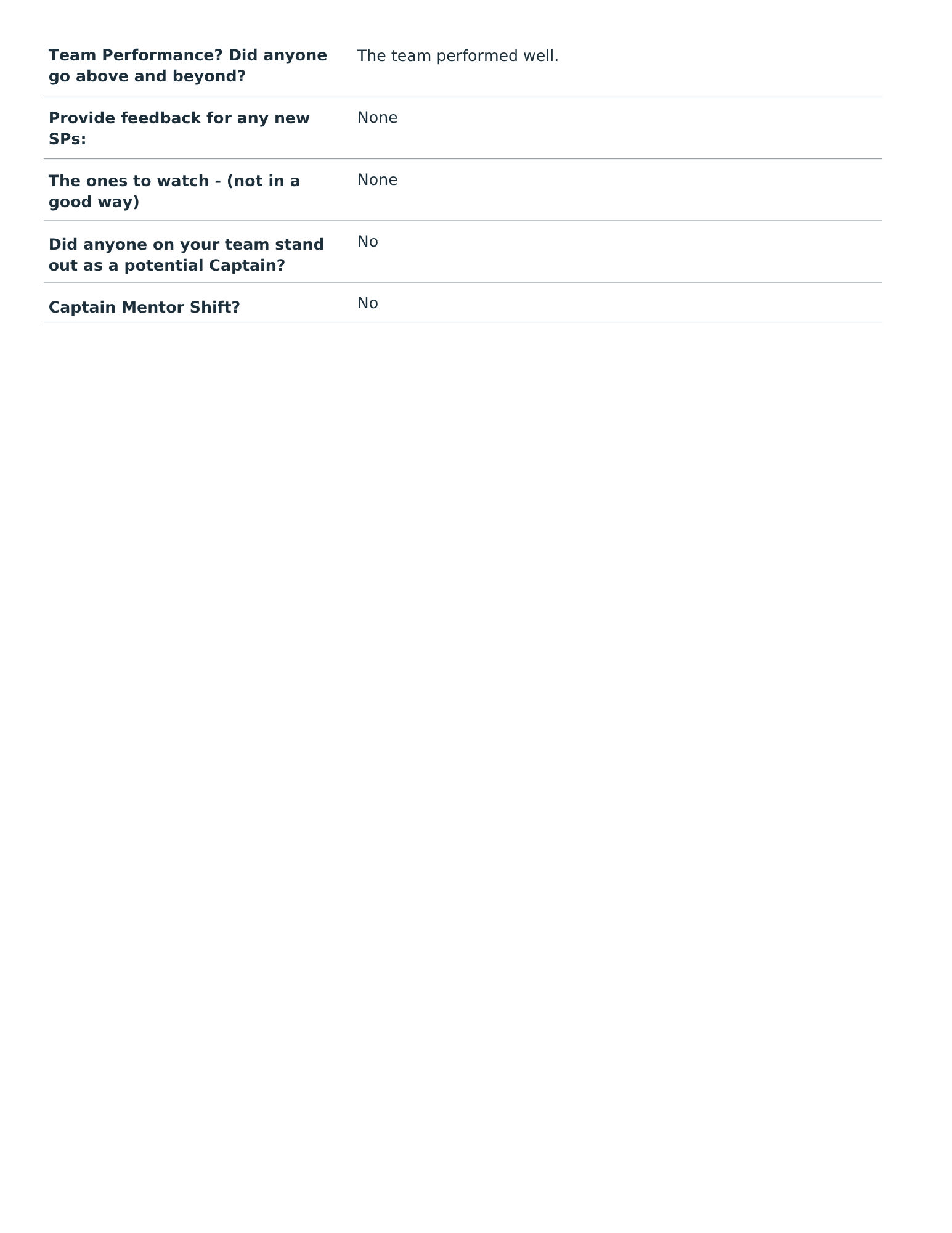
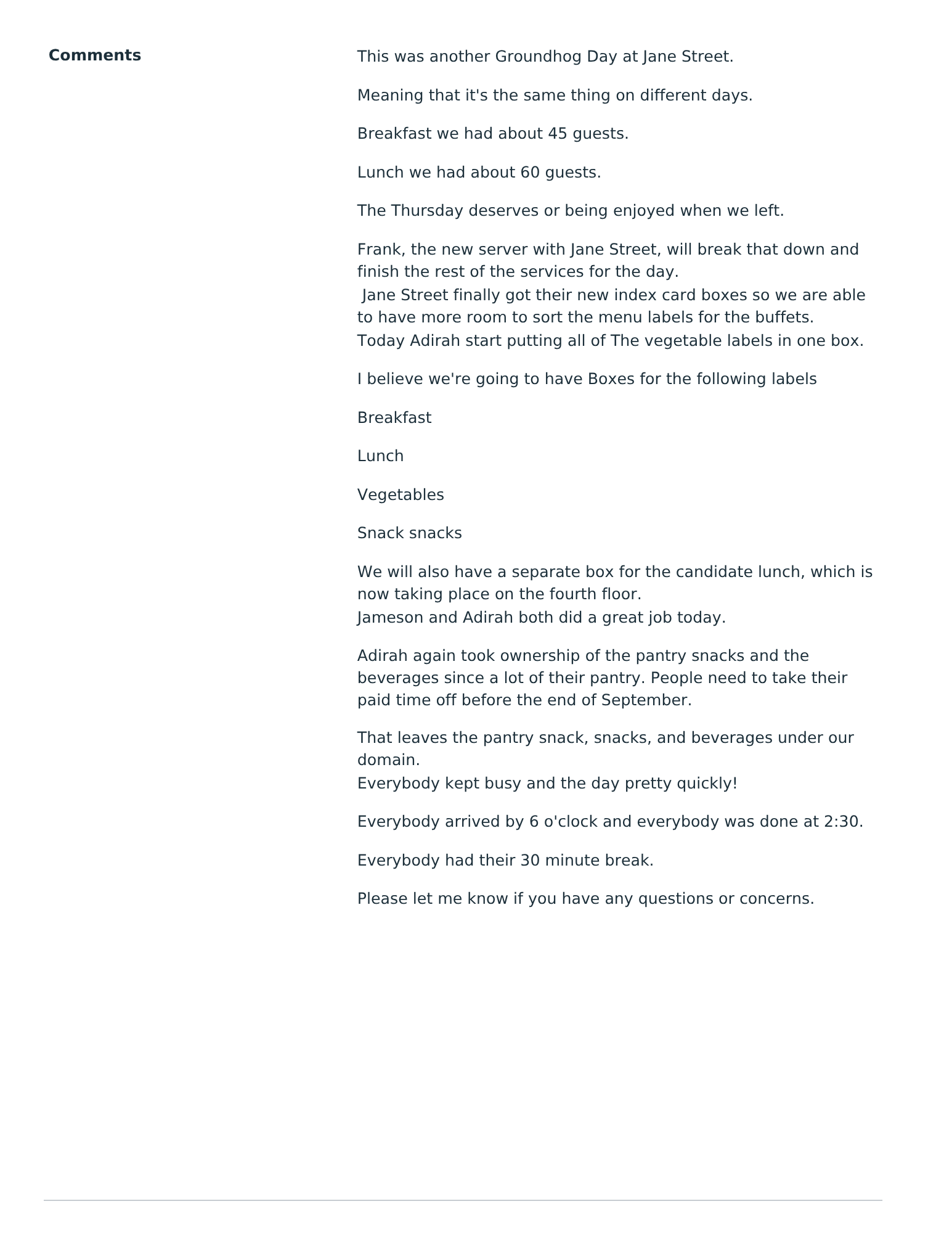
A post-event analysis occurs when a service professional, specifically the captain of a service professional team, reviews an event. It takes place after the event and the service professional team’s debriefing. The post-event analysis includes evaluation, pattern identification, adjustments, and communication of findings and adjustments.
The Post-Event Analysis Process
1.Evaluate the Event
Evaluating an event involves reflecting on how the execution of the event matches the original plan for the event. In reflecting, a captain should address key indicators of event success. These include reviewing event documentation (e.g., BEO, ROS) for accuracy, metrics related to service times and food and beverage pacing, transitions between service types, transitions between service areas, and feedback from the client, the guest, and the service team.
2. Identify Patterns
Identifying patterns involves analyzing the event to recognize structures, regularities, and meaningful relationships. Patterns may appear with respect to documentation, service, or feedback. For example, this may be noticing a satellite bar is consistently out of glassware by a certain point in the evening or that guests bottleneck at specific coat check areas.
3.Make Adjustments
Making adjustments involves synthesizing information that comes from evaluating the event and identifying patterns, then translating this information into plans for the improvement of the next event. This might require modifying event documentation, changing the composition or assignments of the service professional team, changing the physical floor plan or station setups, or modifying protocols for engaging with guests.
4.Communicate Findings and Adjustments
After evaluating an event, identifying patterns, and creating a plan for future improvement, it is important to communicate findings to both the client and the service professional team. Communication with a client often involves submitting a formal report after the event. Communication with service professionals may involve post-event meetings, discussions, or check-ins.
When providing feedback in these meetings or discussions, it is important to use a thoughtful approach, such as the H.E.A.R.T. approach.[1] This involves hearing, empathizing, apologizing, resolving, and thanking an interlocutor if conflicts or issues arise during these conversations.
[1] Cleveland Clinic. “Communicate with H.E.A.R.T.®.” Cleveland Clinic Experience Partners. Cleveland Clinic. Accessed June 15, 2026. https://my.clevelandclinic.org/departments/patient-experience/depts/experience-partners/licensed-programs/communicate-with-heart#overview-tab.