
Event Execution
Event Execution
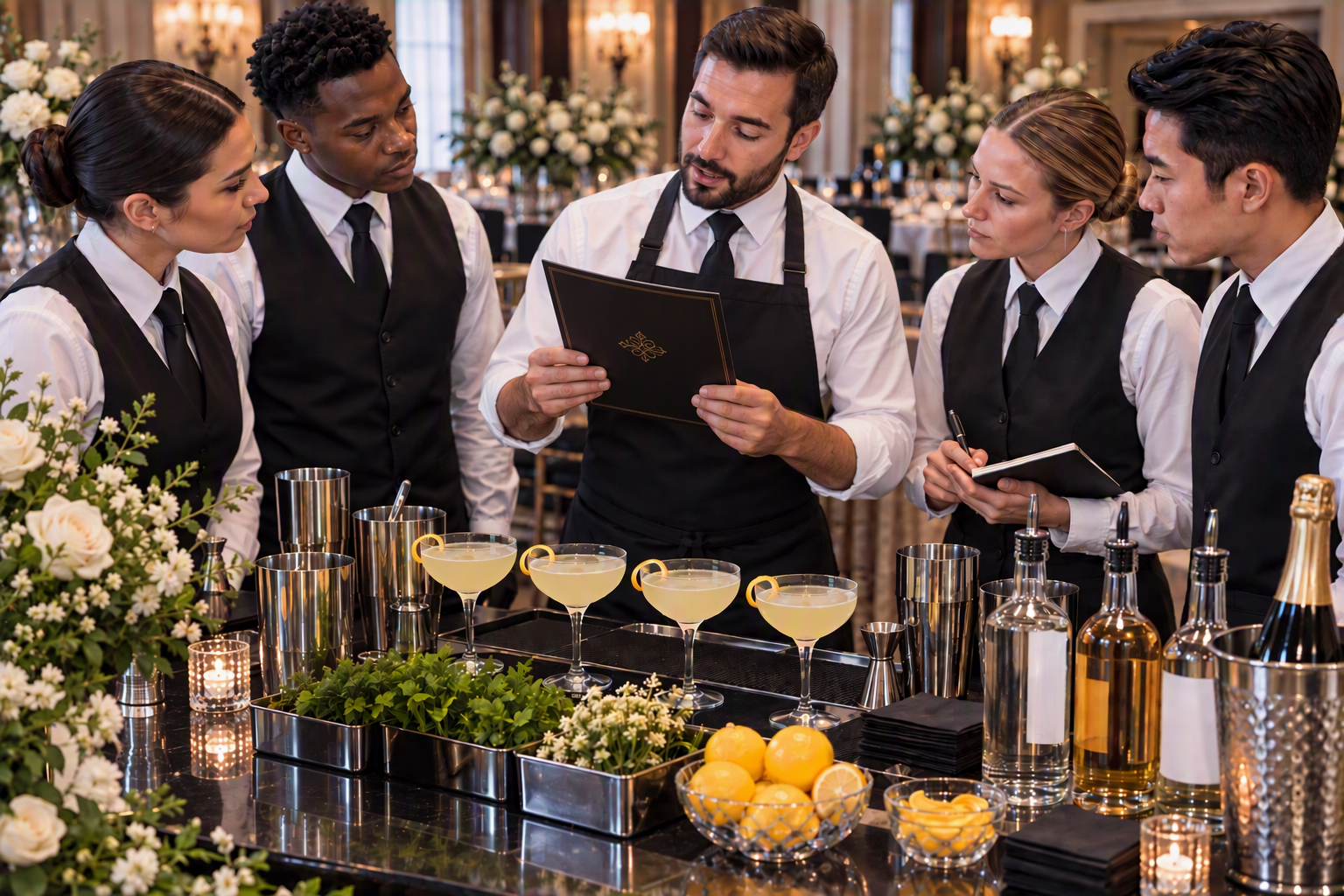
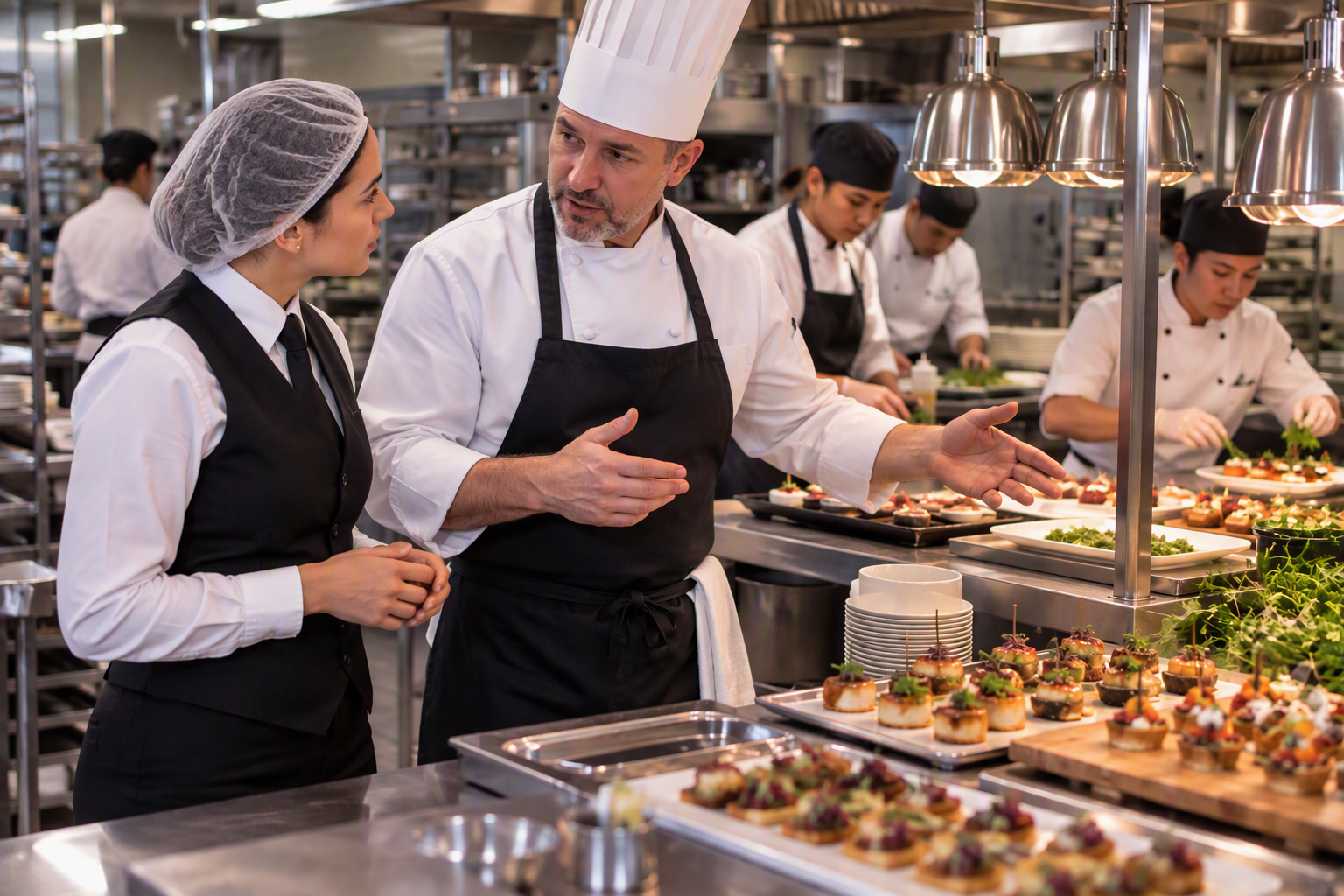
After the cocktail captain has administered setup, they are responsible for executing operations throughout the event. This includes managing key components: preparing for guests, overseeing registration and coat check, offering an entry experience, managing comprehensive beverage and food services, maintaining cleanliness on the floor, ensuring smooth transitions, transitioning to a soft breakdown, and monitoring staff performance.
1. Prepare for Guests
At least 15 minutes (ideally 30 minutes) before “Room Ready” and prior to guest arrival, the cocktail captain should ensure that the floor and bar setup is complete and that the first coordinated round of beverages and hors d’oeuvres will be ready for the first guests’ arrival.
Bar staff should be positioned behind the bar in proper uniform and and ready to welcome guests (if not a service station). Wait staff should be on the floor in proper uniform and also ready to welcome guests.
2. Oversee Registration and Coat Check
The cocktail captain should coordinate with the coat check captain (if applicable) to ensure the proper registration of guests as well as the intake, storage, and retrieval of guest belongings.
3. Offer an Entry Experience
Ensure that guests are greeted as they arrive. Ensure both the BOH culinary team and the FOH bar staff and wait staff are aware of guests’ arrival.
If applicable, have wait staff offer guests an entry experience. One common experience involves offering passed champagne, cocktails, or wine at the entrance. When this is offered, coordinate with the bar captain (or bar staff) and the wait staff to set up two rows of trays for passed beverages that the wait staff can evenly distribute. Guests should be able to pick a glass as they enter the space.
4. Manage Comprehensive Beverage and Food Services to Guests
Ensure the wait staff approaches guests, informs them of beverage offerings, and provides a napkin with the selected offering. Communicate with the bar staff to monitor beverage inventory levels and adjust distribution speed as needed. Similar to offering beverages, ensure the wait staff approaches guests, informs them of food offerings, and provides a napkin with the selected offering. Circulate cold options first and then follow these with hot options as the event progresses and the guest count increases. Communicate with the culinary team to monitor inventory and adjust distribution speed as needed.
5. Maintain Cleanliness on the Floor
Regularly walk the floor, ensuring bussers are effectively removing dirty glassware, dishware, napkins, and any unwanted remnants of beverages or food with trays. Check that bussers are attending to sanitation areas and regularly transitioning between managing the floor and sanitation areas. When applicable, and when covering large cocktail areas for service, assign teams to zones to ensure cleanliness on the floor.
6. Ensure Smooth Transitions
Collaborate with the BOH culinary team and the FOH service professional team to properly time transitions. There may be transitions between service types (e.g., as guests move from a cocktail hour to a seated dinner), between beverage types, between hors d’oeuvre types, and between roles.
Prepare for transitions between service types, considering equipment and staffing. Inform guests of the transition by speaking to individuals, small groups, and (if necessary) by making polite announcements.
Allow wait staff (passers) to alternate between passing beverages and hors d’oeuvres to encourage engagement and decrease monotony. Direct wait staff (e.g., passers, bussers) to switch tasks and move between roles as service demands and ensure new passers are familiar with the hors d’oeuvres and the menu and any allergens.
7. Transition to a Soft Breakdown
Confirm the event end time with the client (understanding the potential for an extension). In the event of an extension, confirm the availability of sufficient beverage and food inventory and address any impact on staffing (e.g., labor costs, the possibility of needing to schedule 30-minute breaks for the service professional team). Communicate all service adjustments to the client and notify the service professional team.
During the final stage of the event, transition to a soft breakdown. Coordinate with bar staff to gradually slow service and begin discreetly closing the bar. Ensure all remaining beverages and food have been distributed and/or are cleared.
8. Monitor Staff Performance
The cocktail captain must monitor the performance of any bar staff and wait staff. To do this, he, she, or they should maintain a visible presence and actively supervise the staff, offering support, guidance, and direction.
Throughout the event, the cocktail captain should:
Direct wait staff to focus on serving high-congestion areas of the floor
Direct wait staff to follow a zone-based approach to efficiently serve the room and ensure no guests miss service
Accommodate guest service requests whenever possible, remaining flexible and committed to guest satisfaction
Adjust frequency of passing hors d’oeuvres based on guest count and consumption, ensuring the food will be sufficient for the entire event
Ensure trays are prepared on time and offerings are served properly and at the correct temperature